Modernization on a Budget: How to Improve Legacy Systems Without Rewriting Everything


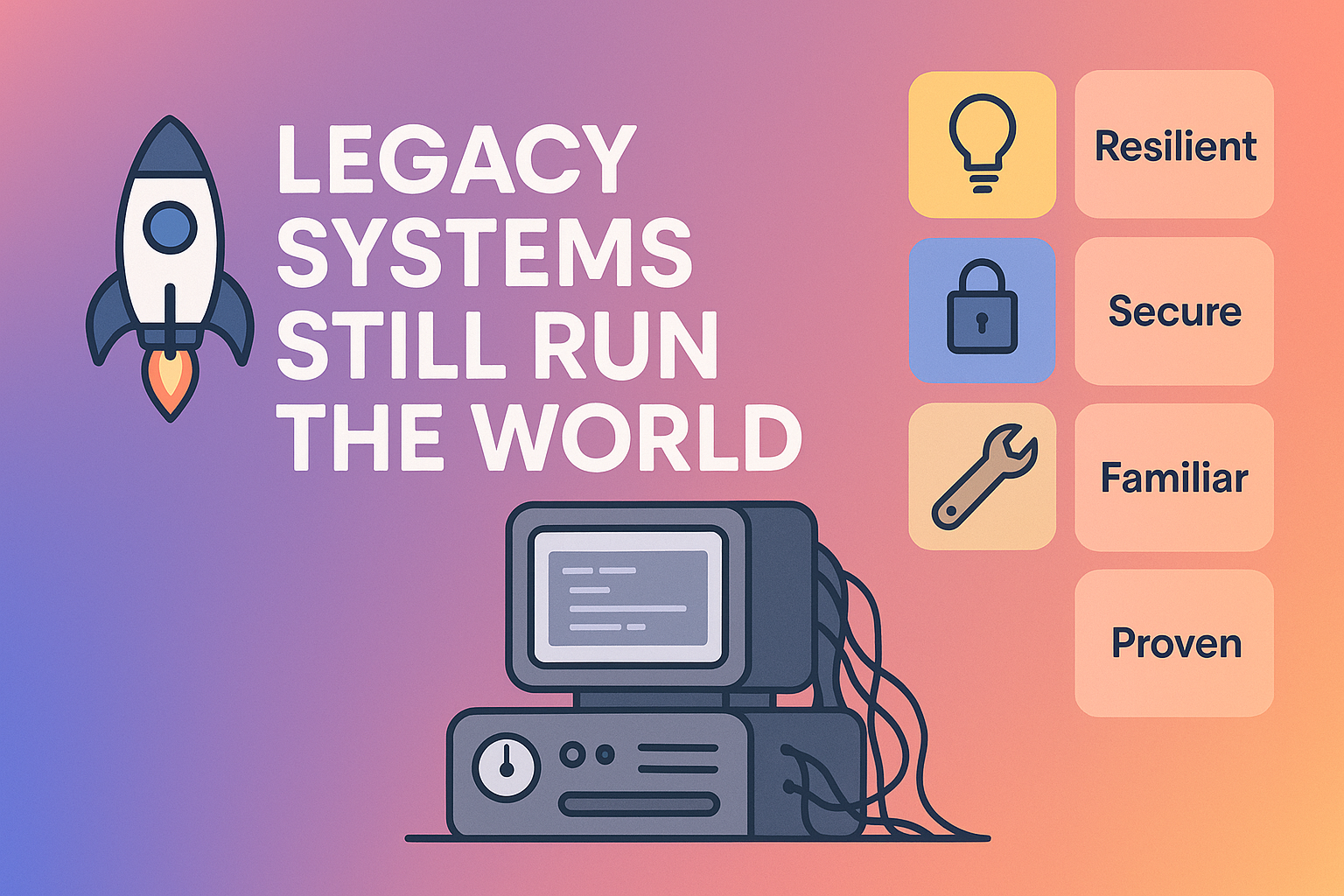
Let’s face it: legacy systems have a reputation. They’re old, clunky, and supposedly standing in the way of progress. But here’s the twist—they still work, and often, they work really well.
So why rip them apart and start fresh? The truth is, you don’t have to.
If you’ve got a tight budget, limited resources, or leadership that’s (understandably) cautious about blowing everything up, modernization doesn’t need to mean massive rewrites.
Instead, you can make smart, strategic moves that bring legacy systems up to speed—bit by bit—while keeping the wheels turning.
💸 Why Full Rewrites Often Backfire
Total rewrites are sexy in theory but risky in reality. You’re dealing with:
- 📉 High upfront costs
- ⏳ Long development timelines
- 🐞 Potential bugs and regressions
- 💥 Business disruptions
- 😰 Overwhelmed teams
Not to mention, there’s always the risk you’ll spend months (or years) building a shiny new system that doesn’t actually solve the right problems.
💡 The Real Opportunity: Incremental Modernization
Now here’s the good news: Modernization isn’t all-or-nothing. With the right mindset, you can improve your legacy systems without blowing your budget or your timeline.
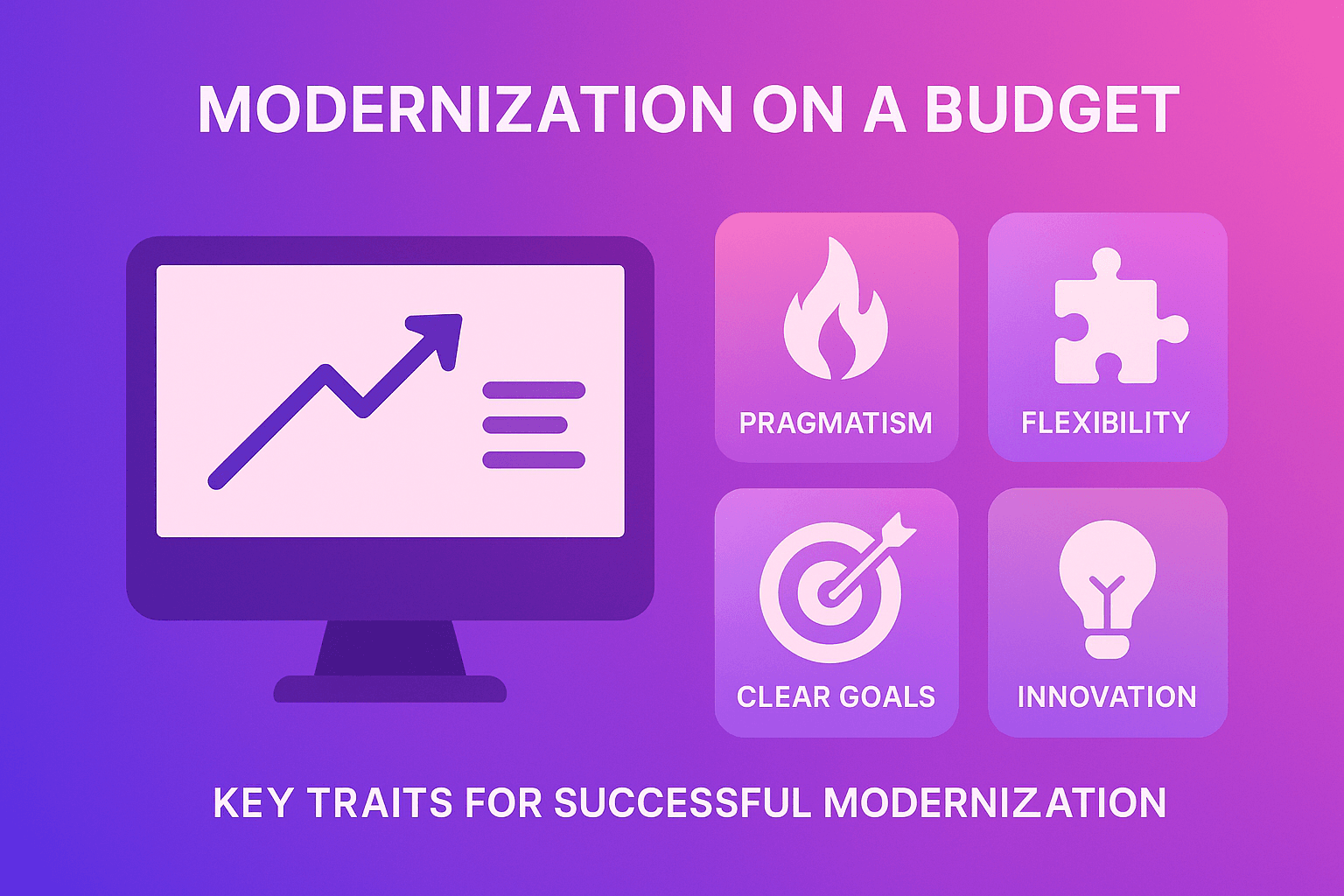
How? By embracing a few key principles:
🔥 1. Pragmatism: Focus on High-Impact Fixes First
You don’t need to fix everything at once. Start by asking: What’s hurting us most right now?
Maybe it’s:
- A slow reporting tool
- A buggy login flow
- Outdated APIs that are hard to integrate
Tackle these pain points first—the improvements your team and users will feel immediately. These wins build momentum and justify further investment.
🧩 2. Flexibility: Think Modular, Not Monolithic
Legacy systems often feel untouchable because they’re tightly coupled. But you don’t need to replace the entire monolith overnight.
Break things down:
- Wrap legacy systems with APIs
- Isolate services (e.g. auth, reporting) into microservices
- Use feature flags to test changes gradually
Modular modernization lets you modernize piece by piece, without breaking the entire system.
🎯 3. Set Clear, Measurable Goals
Before diving in, get super clear on what you’re trying to achieve.
Are you aiming to:
- Improve performance?
- Reduce maintenance costs?
- Support new integrations?
- Enable faster deployments?
Each goal shapes your modernization strategy differently. Without clarity, you risk spending effort on flashy updates that don’t move the needle.
💡 4. Innovate With What You Already Have
Modernization doesn’t mean ditching everything old—it means making the old work better with the new.
For example:
- Use AI-powered tools like LLMs to analyze and document legacy code
- Integrate modern frontend layers with stable backend systems
- Add automation to legacy workflows for efficiency gains
- Use containerization (e.g. Docker) to modernize deployments
In many cases, the smartest move is not replacement—it’s augmentation.
🧠 Mindset Shift: It’s Evolution, Not Revolution
The most successful modernization projects aren’t built on big promises—they’re built on small, consistent wins.
You don’t need to dazzle investors or impress your tech leads with a ground-up rewrite. You need to deliver value—quickly, reliably, and sustainably.
That’s what real innovation looks like. And that’s how businesses stay competitive without spiraling into over-budget transformation projects.
✅ Quick Checklist: Budget-Friendly Modernization Moves
Here’s a rapid-fire list of tactics that won’t drain your wallet:
- ✅ Wrap legacy systems with RESTful APIs
- ✅ Automate manual processes with lightweight scripts
- ✅ Use AI for code review, refactoring, and documentation
- ✅ Move to containerized infrastructure without touching the core
- ✅ Prioritize performance hotspots for targeted optimization
- ✅ Modernize UX/UI without changing backend logic
- ✅ Improve monitoring and logging for better system insights
🧭 Final Thoughts: Smart Progress Beats Big Promises
Modernization doesn’t have to be overwhelming—or expensive. With clear goals, modular thinking, and a pragmatic approach, you can evolve your legacy systems at your own pace, without risking disruption or ballooning costs.
Remember: You don’t have to rewrite everything to move forward. You just have to start smart—and stay consistent.