The “Second System” Trap: Why Over-Engineering Slows Product Growth


Introduction
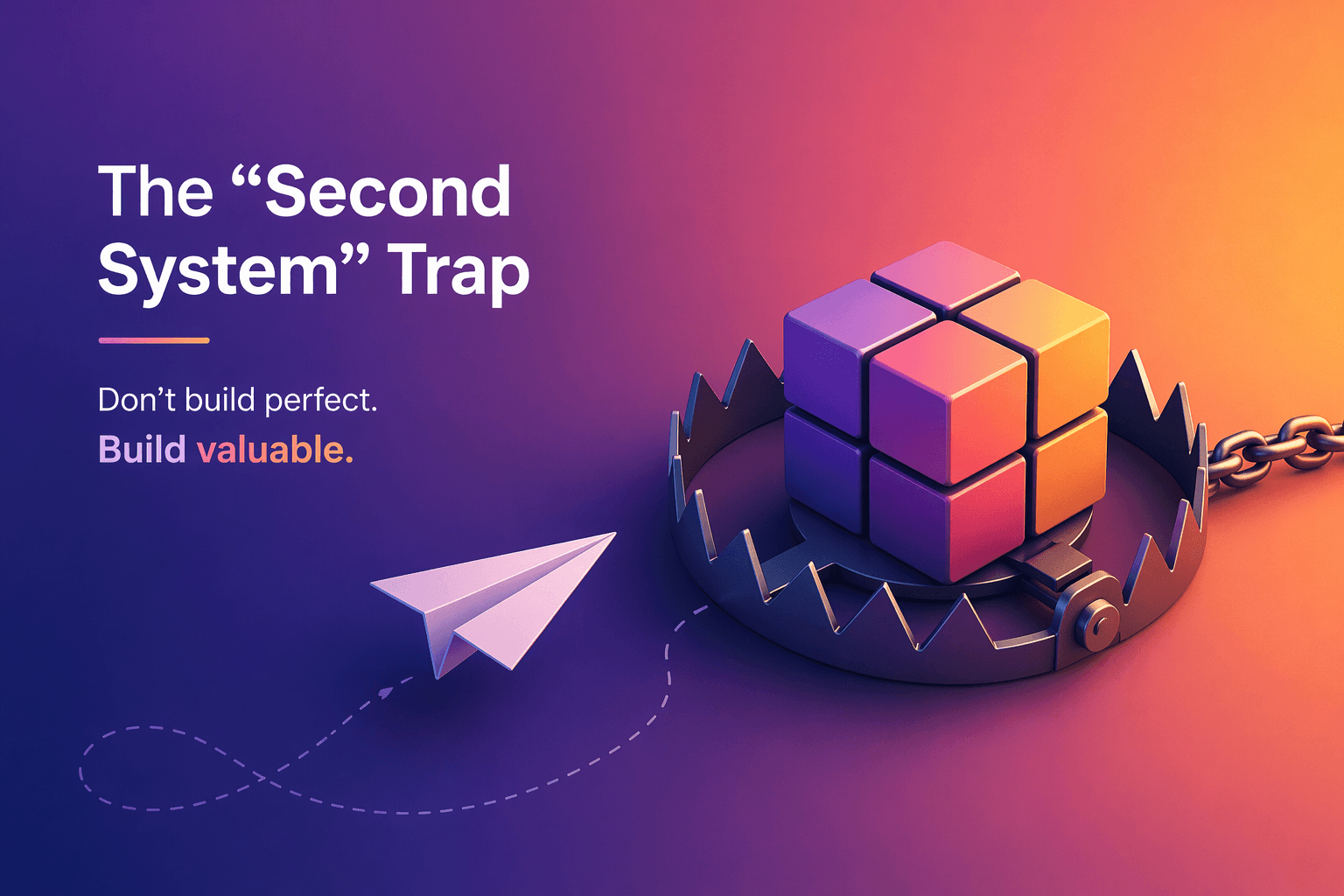
In the world of product development, teams often approach their second iteration with high expectations. After learning from the first version, there’s a natural urge to build something more powerful, scalable, and feature-rich. However, this ambition can backfire—leading to what is commonly known as the “Second System Trap.”
This concept highlights a critical mistake: over-engineering the next version of a product in an attempt to make it perfect. Instead of improving user experience and delivering value faster, teams end up building complex systems that delay releases, increase costs, and confuse users.
🚀 Why the Second System Trap Happens
After launching an initial version (often an MVP), teams gain insights, feedback, and ideas. While this is valuable, it also creates pressure to fix everything at once. The mindset shifts from “build and learn” to “build the perfect system.”
This often leads to:
- Expanding the scope beyond what users actually need
- Introducing unnecessary technical complexity
- Spending excessive time on architecture instead of usability
Instead of solving real problems, teams start solving imagined future problems.
⚠️ Common Traits of Teams Falling into This Trap
🔥 Over-Ambition
Teams try to include every feature request and idea into the second version. Instead of prioritizing, they attempt to build a “complete” product—resulting in delays and diluted focus.
📝 Over-Planning
Heavy documentation, extensive roadmaps, and long planning cycles take over execution. While planning is important, too much planning slows down product delivery.
🚧 Over-Engineering
There is a strong focus on building scalable, future-proof systems—even when the product hasn’t validated its current use case. This leads to unnecessary abstractions and technical debt.
🤝 Lack of Continuous Feedback
Instead of releasing smaller updates and learning from users, teams go silent for months. By the time the product is ready, user needs may have already changed.
💡 The Impact on Product Development
Falling into the second system trap can hurt both business growth and user adoption. Some key consequences include:
- Delayed time-to-market
- Increased development costs
- Lower user engagement due to complexity
- Higher risk of building irrelevant features
In fast-moving markets, speed and adaptability matter more than perfection.
✅ How to Avoid the Second System Trap
1. Focus on Core Value
Instead of building everything, identify the one key problem your product solves best. Enhance that before expanding further.
2. Embrace Iterative Development
Follow Agile and Lean Startup principles—release small, test quickly, and improve continuously.
3. Prioritize User Feedback
Let real users guide your roadmap. Avoid making assumptions about what they might need in the future.
4. Keep Architecture Practical
Build systems that support current needs with room for gradual scalability, rather than over-optimizing early.
5. Set Clear Boundaries
Define what goes into the next release - and what doesn’t. Saying “no” is as important as building features.
🎯 Final Thoughts
The goal of the second version isn’t perfection - it’s progress.
Great products are not built in one big leap. They evolve through continuous learning, feedback, and iteration. Teams that stay lean, focused, and user-centric are more likely to succeed than those chasing a perfect system.
In modern software development, speed, adaptability, and clarity of purpose matter far more than complexity.
So before you start building your next version, ask yourself: Are we solving real problems or just building a bigger system? 🚀